Shift in Russian Tactics: Analysis of 'Passive-Aggressive' Infiltration at the Front
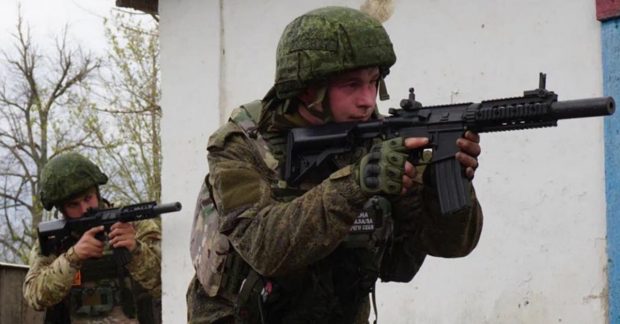
Russian forces have moved away from large-scale assaults toward small-group infiltration, aiming to provoke Ukrainian counterattacks under drone fire.
 🛡️Security
Photo: UNIAN
Key points
- Abandonment of large-scale assaults in favor of infiltration
- Creation of 'gray zones' to provoke counterattacks
- Use of drones as the primary strike tool
- Discrepancy between actual gains and Russian maps
The Russian military command has significantly altered its approach to offensive operations, abandoning the tactic of large mechanized assaults. According to OSINT analyst Monstas, the enemy has shifted to a model of "passive-aggressive" advancement, which involves small infantry groups infiltrating deep into Ukrainian defensive lines while avoiding direct fire contact.
The Core of the Occupiers' Strategy
The primary objective is not to secure territory, but to create deep "gray zones." Russian units disperse across the terrain, attempting to survive and entrench themselves for as long as possible. The main goal of this tactic is to force Ukrainian forces into counterattacks, thereby exposing Ukrainian assault groups to strikes from Russian UAVs.
Analysts note that this strategy is accompanied by map manipulation: Russian reports often claim territorial gains that are not actually under their control. The effectiveness of this approach remains questionable, yet it requires the Ukrainian command to employ unconventional solutions and allocate significant resources to detect hidden enemy groups.
Source UNIAN — unian.ua/war/viyna-v-ukrajini-na-fronti-rosiya-viprobovuye-pasivno-… ↗
Read next
 🚨Events
Court upholds detention of woman posing as medic during military facility blockade
The Kyiv Court of Appeal rejected the defense's appeal and upheld the pretrial detention for a woman suspected of orchestrating provocations at a National Guard site.
 🇺🇦Ukraine
Putin threatens retaliation for attacks on Russian oil refineries
Vladimir Putin has threatened a response to Ukrainian strikes on Russian oil refineries, claiming they ignore US calls for restraint.
 🚨Events
Case of 'pseudo-medic' Moloda: Appeals court upholds detention
The Kyiv Court of Appeal has rejected the appeal of Valentyna Moloda, who is suspected of obstructing the activities of the Armed Forces of Ukraine and disclosing militar…
 🎭Culture & Sport
Young talents from Obrazhiivka win national art competition
Students from the Obrazhiivka educational complex received top honors in the 'I Draw Victory' art competition, showcasing high-level painting skills.
 💼Economy
Shostak’s company paid 200 mln UAH for land near Kyiv to build a logistics park
The firm «VinHub Kyiv 1» purchased four seized land plots in the Bucha district, exceeding the starting price by 16 times.
 🩺Health
Scientists find link between excess weight and accelerated brain aging
New research from the University of Georgia suggests that weight management can be an effective tool for preserving cognitive functions in older age.