The 1963 Space Experiment with Copper Needles: What Went Wrong
Over six decades ago, the US sent hundreds of millions of tiny copper needles into orbit for a communication experiment, and some debris remains in space today.
 💡Tech
Photo: UNIAN
Key points
- The US launched 480 million copper needles into orbit in 1963
- The project aimed to secure long-distance military radio communication
- The experiment failed quickly as satellite technology advanced
- Some copper needles remain in orbit and occasionally fall back to Earth
In 1963, the United States carried out an unusual space project that left orbital consequences lasting for over sixty years. Researchers from a Massachusetts Institute of Technology laboratory launched 480 million tiny copper needles to an altitude of approximately 3,600 kilometers. The initiative was born during the Cold War to establish reliable long-distance radio communication by using the metallic elements as tiny antennas.
Execution and Failure of the Historical Project
Each needle measured 1.78 centimeters in length and was held together by a special substance designed to evaporate in a vacuum. Following a failed attempt in 1961, researchers successfully formed the planned copper belt around Earth in 40 days during 1963. However, within 50 days, the density of the metallic elements dropped too low for effective signal transmission, proving that active spacecraft were the future of telecommunications.
Due to their light weight, a significant portion of the wires eventually returned to Earth. Experts estimate that between 25% and 45% of the needles fell back to the planet, while other clusters re-entered the atmosphere from the 1970s through the 1990s, as well as in 2020, 2022, and 2024. Today, dozens of similar objects may still remain in unstable orbital paths.
«The experiment failed to meet expectations, and some of the metal debris remains in orbit to this day,» reports indicate.
Source UNIAN — unian.ua/science/ssha-zasipali-kosmos-480-milyonami-midnih-golok-ek… ↗
Read next
 🎓Education
Shostka Announces Selection Process for Central District Hospital Supervisory Board
The Shostka City Council has launched a competition to select independent members for the supervisory board of the central district hospital.
 🏙️City
Kyiv bomb disposal experts remove unexploded 50-kg warhead from enemy drone
Law enforcement officers neutralized the hazardous element of a Russian UAV that got stuck in a residential building in Kyiv's Podilskyi district during an attack.
 👥Society
Serviceman and Photographer Artur Nazarov Killed on the Eastern Front
Artur Nazarov, a defender from Sumy who participated in the Revolution of Dignity and fought from the first days of the full-scale invasion, has been killed in eastern Uk…
 🇺🇦Ukraine
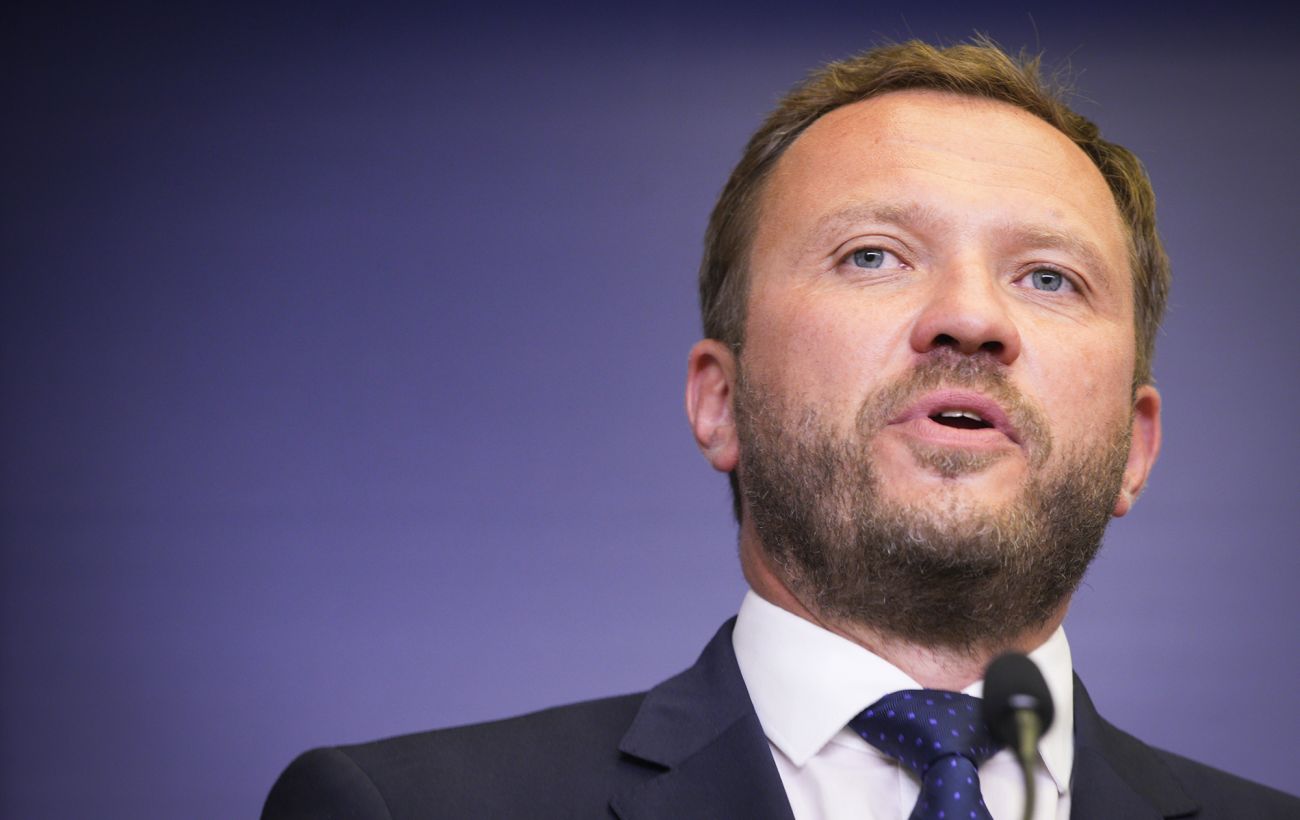
Estonia Strongly Responds to Putin's Offer Regarding Moscow Talks
Estonian Foreign Minister Margus Tsahkna stated that European leaders should not accept Kremlin invitations to visit Moscow, emphasizing that Russia's refusal to stop its…
 🇺🇦Ukraine
EU Advances Ukraine's Integration Path as Hungary Lifts Block on Key Clusters
The EU Permanent Representatives Committee approved the screening results for Ukraine's negotiating clusters 4 and 5, advancing the accession talks.
 💼Economy
Ukraine Approves Methodology for Identifying Strategic and Critical Mineral Resources
The Ministry of Economy and Environment has introduced a unified framework for compiling lists of critical raw materials and assessing supply risks.